Showing posts with label p2p. Show all posts

Tuesday, May 12, 2015

Open value networks and global economic fairness

davidsluka
Disclaimer: This blog entry reflects the thoughts of the author and does not speak on behalf of the Sensorica OVN.

In February 2011, economic fairness became a real possibility with the launch of SENSORICA. The new economic model proposed by this network promised open access to economic activities for everyone in the world, with a system for fair redistribution of benefits, based on merits. 

SENSORICA is an open value network. People propose projects and develop them in collaboration with others. The affiliates use open project development methodologies and generate tasks that are made available for anyone in the world. The time, the cash and any material resource that are used during the execution of a task are logged. A contribution accounting system compiles all the input to projects and displays a profile of the economic activity. If the project becomes a commercial venture the revenues are redistributed to all the participants, without exception, in proportion to everyone's contribution. The venture belongs entirely to the participants, anyone can join, any time. We call these ventures open enterprises. SENSORICA is an incubator of many open enterprises. 

Since the inception of SENSORICA we spent a lot of time developing the open value network model, building infrastructure, designing new methodologies, refining the open governance, implementing a proper legal structure, and developing open new technologies. In 2015, SENSORICA is closer than ever to become an economic success, with a few projects to be crowdfunded during the summer and a few service offerings that have already generated revenue.
This post is not about revenue generation and sustainability. The main goal is to illustrate economic fairness, to show the world how we are fulfilling our promise. 

In January 2015 Atelier Barda, a group of architects and designers from Montreal, trusted SENSORICA with a contract to design an interactive imaging system, to be installed in Forillon National Park, in Gaspesie QC, Canada, which is administered by Parks Canada, a branch of the federal government. The project was executed in an open way. Three SENSORICA affiliates answered the call and delivered successfully, exceeding the client's expectations, who was a bit skeptical in the beginning, knowing that he was dealing with a new type of organization. One of these affiliates, Abran, lives in Pakistan. The project was coordinated using SENSORICA's new open service providing methodology, mediated by our virtual infrastructure.

In the end, the revenue was distributed according to everyone's contribution, and Abran was paid as if he was working and living in Canada. 

credit to Massimo Sestini—Polaris
Europe is now dealing with a major social problem caused by waves of immigrants coming from Africa. This crisis is exacerbated by the drama surrounding the death of a few hundreds of these unfortunate people, who are desperate enough to put their lives in danger by crossing the Mediterranean sea, using inadequate means, lead by human traffickers who are mostly interested in profiteering. A social problem coupled with a humanitarian crisis that keeps politicians on their toes and pushes them to use extreme means, to militarize the Mediterranean sea using UN forces. Are these desperate human beings invaders? Are they the new enemies of Europe? Or are they the result of colonialism and victims years of political interference and economic exploitation? Are guns the solution to this problem? Or more economic fairness?

While our western governments, who created the problem in the first place, make it even worse, we are developing infra-national economic structures, a peer to peer economy, to address the problem at its core.

 By AllOfUs

Monday, May 11, 2015

On how to conduct open and peer to peer ventures

In the Batman The Dark Knight Rises movie there is a scene, called the social experiment, where people in two boats need to make a decision to avoid an imminent catastrophic explosion. In one boat, they form a democratic system and they debate about the problem in order to make the best decision. The second boat is filled with prisoners and their guards, forming a hierarchical, army-like system. The movie shows these two situation in parallel, with a clear preference for the hierarchical situation, essentially trying to convince the viewers that in times of crisis, when things need to get done effectively, we don't have time for democracy. This movie was made during America's military operations in Afghanistan and in the Middle East, justifying the need to bypass democratic processes and even take illegal actions in the name of national security. We can now go back in time and judge if these decisions have had a more positive or negative impact on the US and on the world.
I live in Canada, a so called democratic country, where people spend most of their time in a totalitarian setting, the workplace, where they get things done. If we do the math, we spend most of the time executing or giving orders, depending where we are situated within the hierarchy, Once in a while, very rarely, we are called to vote on community or social issues, and even that is most of the times reduced to chose a representative from a short list that is presented to us, to delegate our decision making power.

Our concept of democracy is affected by our very reduced experience with democratic processes. We seem to appreciate our minimal involvement in shaping the social power structure. We demand transparency and accountability form those in power. But we don't seem to trust a wide open involvement of the public in making granular decisions. We don't even seem to understand how that can be done.

The multitude, or the p2p movement prescribes methods for wide open processes for problem solving (value creation) and decision making. This is known as open (source) development (peer production) and open governance. These methods have been shown to be very effective, but very few people are accustomed to them. Those who don't know them don't trust them, and find them risky.

I have participated in many collaborative projects in the past, which started with the intention to develop as open peer to peer projects and when the panic set in to meet the deadline many of these projects defaulted back to hierarchical/centralized and closed. The argument was always the same, we don't have time for openness, we need to deliver with the expected quality, and fast, which implies that open processes cannot be effective enough.

Can open and peer to peer processes be effective and efficient? I have been involved in such processes for over 7 years and I can say with certainty that they are. But we have to agree on what we mean by open and peer to peer. Gathering together on the basis of good will is not enough, without the proper infrastructure, methodology, governance, and culture. Like with any other process, we need structure or at least a proper environment for structure to emerge, as needed, in context. Open and peer to peer doesn't mean no structure.

We often hear that we need to let the process self-organize. That is fine, but the next question is self-organize into what? As soon as you ask that question another one pops up, how do you do that? How do you set up the environment to foster that self-organizing process so that the system transitions into a state that has the desired characteristic? Emergence will happen, but you might end up in an undesired state. Lock a bunch of people in a room and come back two days later. You may find them divided into two teams, playing a competitive game, or in a circle, trying to solve a problem in a collaborative way, or everyone else listening to one person giving a presentation, or everyone fighting against everyone else like in a bar scene of a classical western movie. All that is possible, and more. But if you give them some initial suggestions, or even some rules, if you put some boundary conditions on the system and prescribe some processes, you will restrict the array of possible outcomes. You can drive this group into a more collaborative or a more competitive state for example.

Groups that are setting up to do something in an open and peer to peer way, and that don't have the proper culture and knowledge about it don't know how to create the conditions to self-organize into a desired state, one that preserves the characteristics of openness and peer to peer. Some of the features of this desired state are to deliver solutions in an effective and efficient way (and yes, it works), along with empowering the participants, giving participants the opportunity to lean something new, increasing the level of participation, etc. As soon as the panic sets in, their familiarity with hierarchical and closed processes feels like a comfort zone for them, and that pulls them back into their default dynamics.

So what does it take to conduct projects in an open and peer to peer way, effectively and efficiently? There are various recipes that apply in different contexts. Scale is an important factor, which is about the number of participants. The type of project is another one, related to the type of resources needed, to the nature of the deliverable, to the type processes involved, ...

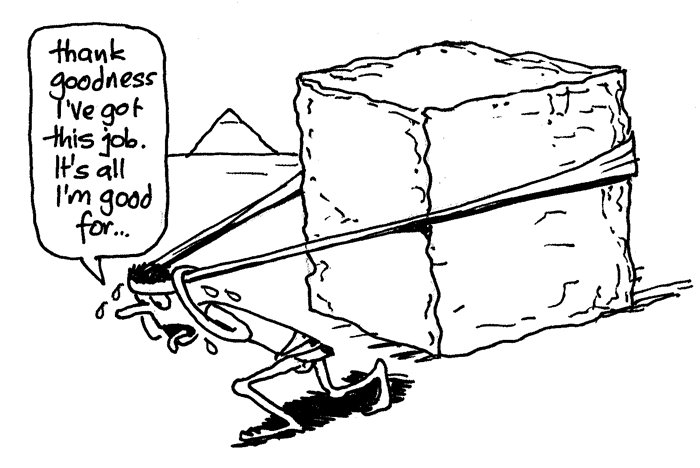
First, we need to evaluate if the initial group has the open culture. This post is not the place to describe what that culture is in detail. Let's just say that the individuals involved need to be comfortable with sharing early, working transparently, collaborate and even co-create, which involves being non-territorial and non-egoistical, accept and provide constructive criticism, be independent, be respectful, be inclusive, be helpful and attentive to others' needs, understand the value within the network or the community, protect and nurture the commons, have a sense of purpose, etc. The better the culture the less governance is needed, because people instinctively know how to conduct themselves. I have worked in groups with the proper culture and it feels like honey. Everything runs smoothly, people find their place rapidly, they know how to take initiative without stepping on anyone's foot, decisions are made effectively without alienating many, ... I also worked in groups with a poor culture. It feels like rolling a stone ball up the hill, dropping it from time to time and starting all over again. People are in for their individual benefits, they fight to occupy prominent roles, they are focused more on having their ideas accepted rather than having the best idea shaping up, they can't share early or collaborate and produce poor results for which they cannot take constructive criticism. When it comes to benefits, they would like to have it all. Instead of helping others they try to outperform them to gain more visibility, ... Sometimes we are forced by circumstances to work with people that don't have the proper culture, and in that case we need norms and rules, we need to install open governance.

Open governance is about decision making processes, conflict resolution mechanisms, norms and rules of conduct. There are many recipes for this too, and we are not going to provide a complete overview here. If you want to dig more, search ''peer governance'' on http://p2pfoundation.net
Examples are: define ''membership'', frame ''initiative'' and describe how to make incremental decisions, describe how broad scope decisions are made (see consensus building and lazy democracy for instance), describe rules for accessing, modifying, and sharing content, describe representation rules, describe expulsion rules, etc.

Third, we need to put in place methodologies, which describe how new members are integrated, how meetings and other tasks are conducted, how to deal with documentation, how to allocate different types of resources, how to conduct research and development, how to do outreach, etc.

Last, but not the least, we need to put in place some infrastructure, which is a system of tools used in processes. These are internal communication and social media channels, content management system, resource planning system, project management tools, perhaps a reputation system and a value accounting system, etc.

It is important to note that the tools and methodologies used affect the culture of the group. For example, if the content management system is a public wiki and the methodology around documentation is designed around this tool, the group will most probably inherit a collaborative and open culture. That is because the tool and its associated processes are inherently open and collaborative. First, they act as filters, attracting predominantly individuals with the proper culture, which will form a critical mass and induce a change in the not so accustomed minority, which will tend to conform. Second, being exposed to these tools and processes allows one to experience and learn the open ways, and perhaps to even appreciate them.

We also need to mention that the culture, the governance, the methodologies and the infrastructure need to form a coherent system. If the group adopts an infrastructure with limited access for the majority of its members, for instance if the content management system allows only a few members to edit content, these privileged members will effectively have at their disposal a lever of power by controlling the content. This situation can spoil other processes, but it can be addressed by putting in place rules for content management, allowing the group to democratically elect those who hold the key to the content and to remove them from this position in case of abuse. Small groups that also have the proper culture can probably function even without these rules, but the situation can be unstable.

Even before we put all this in place to increase the resilience of an open and peer to peer endeavor, there is still a big hurdle to pass. I can say that this is probably the hardest one, even for someone with a lot of experience. If the forming group doesn't have the proper culture, it might become very difficult to create the proper conditions for the project. That is because those with little experience with the open and peer to peer are not very good at recognizing talent and skills, and at stepping aside to let those with experience set it up for them. Most probably, you will find at least one in the group who, for various reasons, will oppose or marginalize those who show initiative and fine skills, who could set the ground for a successful venture. Sometimes, the initiatives of the skilled individual are rejected because they are simply not understood, and since in the beginning there is no governance in place to frame initiative or even to make decisions, the chance to even put that in place is reduced. In these situations, most often than not, the skilled individuals get frustrated and quit.

In conclusion, open and peer to peer ventures can be very efficient and effective. If you want to experience their benefits you need to understand that in order to run this types of ventures successfully you need people with the proper technical skills, experience and culture, which can create the proper initial conditions. If you succeed in attracting some of these people, make sure you keep them close and happy.

t!b!

By AllOfUs

Saturday, January 3, 2015

The stateless economy, local economies, and the state

NOTE: This is the second draft. This post was motivated and informed by THIS discussion on Facebook. 

The Multitude movement enters a new era, where its processes can be supported by truly p2p infrastructures. Bitcoin is now a well-known symbol of a new breed of exchange systems, called cryptocurrencies, money without the bank, stateless money, a new currency that looks and feels like your ATM card, but it is entirely decentralized, under the control of those who use it.

Peer-to-peer is a new pattern that emerges in almost all the spheres of human activity, from culture, to governance, to the creation and the distribution of goods and services. It is the underlying pattern of the current leap in the emancipation of the multitude (see the multitude manifesto). Bitcoin is the poster child of p2p exchange systems, but the same technology is now expanding and promising much more:
From Ethereum project: Satoshi Nakamoto's development of Bitcoin in 2009 has often been hailed as a radical development in money and currency, being the first example of a digital asset which simultaneously has no backing or "intrinsic value" and no centralized issuer or controller. However, another, arguably more important, part of the Bitcoin experiment is the underlying blockchain technology as a tool of distributed consensus, and attention is rapidly starting to shift to this other aspect of Bitcoin. Commonly cited alternative applications of blockchain technology include using on-blockchain digital assets to represent custom currencies and financial instruments ("colored coins"), the ownership of an underlying physical device ("smart property"), non-fungible assets such as domain names ("Namecoin"), as well as more complex applications involving having digital assets being directly controlled by a piece of code implementing arbitrary rules ("smart contracts") or even blockchain-based "decentralized autonomous organizations" (DAOs). What Ethereum intends to provide is a blockchain with a built-in fully fledged Turing-complete programming language that can be used to create "contracts" that can be used to encode arbitrary state transition functions, allowing users to create any of the systems described above, as well as many others that we have not yet imagined, simply by writing up the logic in a few lines of code. (See the source). 
For those who think that all this technology is nothing if it doesn't live on its own support, on a p2p Internet, take a look at the MaidSafe project, FNF and many others like them. MaidSafe is special because it comes with its own economy, it's own ways to incentivize the development and maintenance of its physical infrastructure, and has a cleaver launch and growth model which takes advantage of the existing infrastructure.  

We are creating new economic processes with their own exchange systems that know no borders, no political boundaries, and no central authority (which doesn't mean no rules or chaos). We are creating a stateless economy. How states respond to it? How does it relate to local economies?

One of the most interesting observations in relation with this new pattern that deploys globally on p2p infrastructures is the emergence of a global multitude. It is a very diverse multitude. This diversity is rooted in values and principles rather than in local customs. We speak about it as different cultures of online communities. These new social structures transcend the state, which has no effective means to control them. We are witnessing the emergence of new social structures, that come with their own support mechanisms.  

Will states turn against these trends as a reaction of self-preservation? Yes, see for example a list of states that ban bitcoins. I predict that this opposition will grow stronger in the near future, but no state can bury an idea whose time has come. No state can oppose something that benefits a large percentage of its  citizens, especially when the current economic model is evidently unsustainable, morally bankrupt, openly criticized, in decline. What should governments tell their youth looking for a job? The answers can be read in the daily news in Greece, Spain, Italy, France, USA, ... and the list is growing longer every year. 

There is antagonism between the state and this new Multitude outburst, with its p2p practices. Do we see a solution out of this standoff? Institutions are not eternal. They have a life cycle as any other thing. Nation-states were created in the 19th century. The state is an instrument for local communities. People are above the state. The proof is that we, the people, have outlived all the social structures that have existed throughout our history. In the future we will form new social structures and will find new ways to sustain our local communities. How are local communities adapting today?  


The stateless economy is not in contradiction with the local economy

I am drawing my conclusions from my work on the Open Value Network (OVN) model within the SENSORICA community, a pilot project for long tail peer production

Forces and mechanisms behind the emergence of local economies

The impact of human activity on our planet is now visible, measurable, which makes us realize that our way of living is outgrowing the Earth's capacity. Pollution and degradation of natural ecosystems, the energy crisis, and an unstable geopolitical situation are aligning to favor the development of diversified local economies. New technologies for renewable energy, for new materials, automation, robotics, and 3D printing, make local production for local consumption economically viable.  


The relevance of proximity and its role in the self-organization of local economies 

The Internet allows coordination and collaboration at the global scale. Design and simulation activities have been virtualized. Engineers can now collaborate online on designs that can be virtually tested and simulated. Innovation has gone virtual, it has been delocalized. This allows the existence of new modes of innovation supported by a new socio-economic structure, the open source community. But making stuff (manufacturing hardware for example) requires local physical resources (materials, tools and equipment, space,...), uses local processes (digital fabrication, assembling, ...), relying on local know how (which cannot be formalized, externalized, and easily passed to others through a medium like the Internet). The Internet doesn't obliterate the need for locality and proximity when it comes to production and distribution of material goods. Locality anchors processes to a specific location, the need for proximity ties different processes into a local economy.  


From global commons to local economies.
This is how the new economy is shaping. It builds on another new reality: 
Knowledge is abundant, know how and capacity of production are scarce and require proximity.
Knowledge is abundant because one idea becomes available to the entire planet as soon as it is shared on the Internet. That single idea can be shared with everyone on the planet at once. There is no limited quantity or debit, it can be accessed anytime and people don't need to take turns to access it. Everyone can have it, together with other ideas produced by other people. That's abundance. Thus, the Internet is a growing repository of ideas that people use to generate new knowledge, which is itself shared, and so on. Sharing is part of the process because it makes the whole system more efficient. Sharing is also imposed by a minority of individuals who have a natural propensity for it. Since ideas usually pop up in different locations at small intervals of time, someone will eventually share something, which obliterates someone else's wish to keep it a secret. This global swarm of ideas and knowledge building is actually a new mode of innovation, open source innovation, supported by a new social-economic structure, the open source community

Open source communities, which are virtual and stateless, are now the most innovative organizations. 3D printing has been democratized by open hardware communities, which continue to lead in 3D printing innovation, despite a few corporate successes. The same can be said for automation and control systems, with Arduino being the most popular example. DIY Drones is where the innovation in UAV technology happens. The dominant mode of innovation is now global, decentralized, stateless, increasingly using it's own physical infrastructure (a network of fablabs, makerspaces, co-working spaces), increasingly using its own funding mechanisms (crowdfunding and peer lending)

The abundance of knowledge goes hand in hand with the creation of a global knowledge commonsThis global knowledge commons gets materialized into local economies, using local know how and local capacity of production. This materialization requires a special type of infrastructure and new economic models. Let's illustrate this potential with two examples: 

Transportation: 
Your local community needs adapted means of transportation? You can open a Local motors shop and grow a community around it to produce and distribute cars, locally. You continue to be plugged into the global Local motors community in order to benefit from the stream of open innovation that comes out of it. You can also join other similar communities like Wikispeed and the OScar in order to incorporate even more potential. There is no intellectual property around these car designs, they are open source and everything you build on top of these designs becomes open source by default, goes back into this global commons. Manufacturing a car, its distribution, and services around it forms a local economic activity. In order to make that happen, a tight and synergistic relation must be established between the global open innovation process for designs and the local production processes. This relation insures that the feedback (for product improvement, diversification) that comes from the consumer, in direct relation with the local manufacturer and service provider, is translated into technical problems and passed on to the global open source community of designers. The relation is established and maintained by channels of value between the local and the global/virtual layers. An example is a system of revenue sharing from the local to the global/virtual layer of innovation. This is what the Open Value Network (OVN) model is trying to achieve, with its contribution accounting system.  

Agriculture: 
You need to improve food production in your region? Join Farmhack, which provides open source solutions. Open source ecology offers tools not only for agriculture, but also for the construction of your farm and even for the construction of an entire village (see also Appropedia). There are similar online communities for indoor growing, automated greenhouses, hydroponics and aquaponics (see HAPI)... Name it, you'll find it. These sources for knowledge and designs are complemented by other tools and services for resource sharing and management, like landshare and shareearth (for land), neighborgoods (for tools and equipment), plantcatching (for plants and seeds), as well as more complex tools for mapping and economic modeling (localfoodsystems), etc. This new ecosystem needs to come tightly together into an open value network which allows resource flows between different nodes. Local food systems are reorganizing along a different logic. 


New types of organizations are needed in order to orchestrate and incentivize the development of the global commons and to funnel it into sustainable local economies. I bet on the Open Value Network (OVN) model and on organizations like SENSORICA, because in my opinion they take into consideration how innovation, production, and distribution are restructuring. 

Within OVNs a need (local or not) is translated into a problem, which comes with its own incentive system (monetary or others), to be solved by a global, stateless community of developers, into open source solutions. The solution is materialized into a product or a service at the point of origin of the problem, and distributed to those in need, in exchange of some form of benefit/revenue. The revenue gets redistributed to ALL the participants in proportion to their contributions, using a contribution accounting system (records contributions) and a benefit redistribution algorithm (turns contributions into benefits). Since the solution is open source, others can also distribute it as is, or as a modified/improved/remixed version, also giving back to the original contributors in order to buy their loyalty and to sustain the open innovation channel, in order to sustain the link between the local economy organized around production, distribution and servicing, and the global and virtual layer of open innovation.

New infrastructures are required to support these organizations and their processes. OVNs are supported by a network resource planning and contribution accounting system (NRP-CAS). These tools will move on truly p2p infrastructures like Ethereum. It is important to realize that these new economic systems would be dysfunctional if they were obliged to use classical means of exchange. Imagine a project with thousands of participants and a long tail contribution distribution. The redistribution of revenue to all the contributors for every market exchange (every sale), as prescribed by the OVN model, would require thousands of micro-payments across the globe. Also, imagine thousands of individuals crowdfunding a new equipment used in a project. This would also require thousands of cash transfers from all the contributors into a unique bank account, from which the purchase is made. Bitcoin and other currencies built on the blockchain technology improve the ability of OVNs to incentivize open innovation and to source its processes. 

Open source innovation has been proven to be the most effective mode of innovation. It is supported by open source communities, which are by nature open and decentralized, global and stateless. Innovation drives our modern economy, therefore open source innovation is here to stay, and the rest organizes around it. In order to close the cycle from idea to the market, new types of organizations have been created, based on the OVN model or others hybrid models (for more on these hybrid models see Open Source Hardware meets the p2p economy). New infrastructures have been created to tie everything together into self-sufficient value systems, into open value networks. These infrastructures are designed to support the p2p pattern, reducing the role of the state. Local communities have new alternatives for thriving, which require a radical redefinition of the state.  

Some states have banned cryptocurrencies, which reduces the ability of open value networks (tying global/virtual open source innovation systems to the local economy) to form and develop, which in turn takes away viable alternatives for local communities. 

Without embracing stateless p2p practices we don't actualize the full potential of the new digital technology in making our economy more effective, efficient, and sustainable. Without embracing stateless p2p practices we will see the collapse of our local communities, as the state gradually collapses. States that are fighting stateless p2p processes are essentially denying their local communities access to the p2p economy, an alternative that already shows clear signs to be effective.  

Tuesday, September 18, 2012

The role of power relations in a p2p economy


The #occupy movement, which is a surface manifestation of a deeper Multitude movement, is in fact a refutation of power. Not only of the "power in place", i.e. big banks, governments, etc. but of what we call "instituted power", the kind of power your boss has over you. The consensus decision making process, a form of direct democracy that has been adopted by the #occupy movement, is the most obvious affirmation of this refutation of instituted power relations, which until now has been seen as a necessary structuring mechanisms of society. 

Where is this coming from? Was it there before? Is this pure Utopia? Or is there something fundamental happening, which makes instituted power relations lose their importance?  

We often hear that instituted power relations are tolerated by people because they are believed to be essential to organize us into efficient and effective groups, to achieve complex goals. Some say that without instituted power relations society would simply brake down, collapse. Go tell that to an anarchist... 

Sunday, September 16, 2012

Value Networks, about commercializing their products

We take the example of a specific value network, SENSORICA.

The problem

One of SENSORICA’s main reason for existence is to provide for its members/affiliates the means of subsistence and well-being. This is to say that the surplus value that is created by the network must be exchanged on the market against other values, which are to be redistributed to participants based on their relative contribution. This redistribution is done according to the value accounting system, to which all members must adhere. The goal here is to establish a channel of distribution for SENSORICA’s products. The problem is that there are laws and regulations which makes it difficult for a non-legal entity like SENSORICA to sell certain products. Someone must take the blame if those products don't respect established standards, and our society doesn't know how to interface with things like SENSORICA.

Solution 

In the current situation, we need to create legally recognizable forms to channel products through them. This is actually the role Tactus Scientific Inc. plays for the Mosquito Scientific Instrument System, designed for the scientific instrument market segment.

Tuesday, June 19, 2012

How to play the open game in the present and future economy

This is the fifth draft; it will evolve based on your feedback. First published on 6/19/12. Last modified on Jan 13, 2026. Come back later for more...  
--------------------------------------------------------------------------------------------

More and more solutions to our problems today come in the form of open artifacts, i.e open source software and hardware, created by online communities and networks. Traditionally, most of these communities have relied on voluntary participation or some type of gift economy, i.e. the developers do not expect a direct or immediate tangible reward for their contributions. These open artifacts have been regarded as marginal, mostly intended for amateurs and hobbyists. How can one expect serious things to come out of loose organizations that don't use the prescribed governance model and methodology, and don't have access to a large budget? At least this was the unadvised belief, until we realized that critical infrastructure, like the Internet, runs mostly on open source software, created and maintained by these unorthodox organizations. Ingenuity, the helicopter drone, part of the Perseverance mission to the planet Mars, operates on Linux, which is an open source operating system. Bitcoin, runs on open source software and is supported by an open group of people (miners), who can be practically anyone with a computer and an Internet connection. Since Bitcoin was launch in 2009, no one has hacked it, despite the astronomical reward, ranging in the tens of billions of dollars, if we only consider the abandoned accounts of Satoshi Nakamoto, the creator of the network. So some open artifacts developed by unorthodox organizations are pretty serious, highly secure, mission critical, or operating at global scale. There are also lots of crappy ones, as there are crappy products offered by serious companies.

What I call playing the open game is developing open artifacts (based on open source technologies) relying on unorthodox organizations and being able to make a living.

There are a few important components to the open game... 
 
First, there's the intellectual property regime. Open source means that no one can create a temporary economic monopoly on a particular solution, as it is the case with products based on patented technologies. If one cannot control the artifact how can one capture value or generate wealth? 

In the most simple terms, how can one make money developing open source technologies. My first reaction to this question is to point to the obvious: 
  • IBM has invested billions of US dollars in Linux and other open source technologies. ref
  • Google has gained mobile dominance by opening Android, the mobile operating system. 
  • Tesla has engaged in a hybrid IP strategy, i.e. open source patented

The second order economic model 

It becomes possible to generate wealth while developing open source technologies, if the business model is not simplistic and/or linear. In most viable cases, whatever is open source is not the product, but by open sourcing some technology in the IP portfolio, these companies produce some effects within their ecosystem, which they can harvest or leverage for their core business. In the case of Google, opening Android increased its adoption rate, while propagating some core Google functionalities, thus putting Google services in billions of mobile devices, which then could be monetized using Google's core business model. We also see a second order kickback pattern with online services like Facebook, where free access is given to a digital service (search or connecting and interacting with people), while making money from selling users' generated data or attention. So we need to stop thinking about business as a simple and linear process, as simply transactional.

A similar example of second order economic model, extended to a whole community or ecosystem, is Tiki, an open source wiki CMS groupware? The wealth generation model is similar to Red Hat, the poster child, based on support, training, and consulting services around the core open artifact, which is offered for free. 
 
At this point, I find that is it important to raise to your awareness the fact that the wealth generation model is not the same when the technology is software or hardware. It is beyond the scope of this post to dive deeper into this distinction, but if you're interested, we can discuss in the comments.

Note that I have deliberately use the term open artifact instead of product and the expression wealth generation or economic model instead of business model, to avoid cognitive interference. When we say product people think about commodity, something that you can buy/sell on the market. But you cannot sell the Linux operating system (an open artifact), which defies the law of supply and demand, as it is an abundant, non-rivalrous resource, since its reproduction (copy/paste) and distribution (download) costs are negligible. The case of open source hardware is not the same, but similar. The costs for reproduction and distribution are high for material artifacts, but since everyone has access to the design, anyone can fabricated it locally, (see more on distributed fabrication and DIY - Do-It-yourself), making use of digital fabrication techniques (3D printing, CNC, etc.).

Beyond money

So what about the expression wealth generation
When we say wealth most people think about money. When engaging in open source development, people are seeking other forms of wealth, for what they are in themselves (or for a later conversion into money, monetization). For example, someone may want to contribute to an open source project to learn new skills, to develop new relations with people that have specific skills or that share specific values, or to build reputation. In some cases, when money is introduced as a motivation factor in open projects the social cohesion breaks down.
 

So playing the open game requires a renunciation of mechanisms of control of intellectual property, which entails the refusal to create a temporary monopoly and thus the adoption of more sophisticated economic models or the adoption of different forms of wealth or new forms of value. But the open games deploys within a very different organizational environment, to which we already alluded above, as most of the time the open artifact emerges from open organizations or networks

p2p as a new organization paradigm 

Recently, we have witnessed the emergence of new economic models that brake away from the gift economy, directly rewarding those who contribute (with time, financial capital, social capital, ...) to open projects. The open artifact is gradually becoming sustainable. The first step in this direction can be illustrated by Open Source Ecology, which designs open hardware for farming, construction and manufacturing. The designs are  entirely open and free, but the Open Source Ecology community is not interested in commodification, i.e. market exchanges, their designs made with DIY (Do It Yourself) in mind, destined to be produced by the user, or very close to the point of use. In the case of Open Source Ecology their model for subsistence is based on revenues in fiat currency, from donations or educational services.

Open crowdsourcing is another model in which designers, part of an (open) community, are rewarded to complete a project. This scheme doesn't only rely on donations or voluntary participation, since those who contribute are rewarded in exchange with some symbolic gifts (tokens of recognition), reputation tokens, job opportunities, etc. Arduino is an example of such model, a hybrid between the open (value) network OVN and a traditional business, which relies on a vast community of enthusiasts to propose new designs, find and eliminate bugs, engage in promotion, etc. 

There are also closed and non-transparent crowdsourcing initiatives, such as prizes, in which only the best contributors are rewarded. Contributors are often placed in competition against each other. The resultant designs or artifacts are closed and remain under the control of the initiator. We are definitely against this new form of human exploitation, as you can see in this post

Sensorica is based on a more radical model, referred to as an open value network (OVN), which implements commons-based peer design production. It is in fact a mix between a gift economy and a transaction-based, or market economy. Sensorica can produces open artifacts that can either be exchange on the market or disseminated as DIY open designs. Various forms of rewards (including revenue from market exchanges or donations) are redistributed to all contributors in proportion to their contributions, based on a Benefit Redistribution Algorithm, which is at the heart of the Network Resource Planning and Contribution Accounting system (NRP-CAS). 

Wednesday, June 6, 2012

P2P


a post by Poor Richard

What is peer-to-peer (P2P)  culture?
P2P culture is the post-capitalist framework that makes the most sense to me. It includes but transcends capitalism; and encompasses many hybrids of open and closed, public and private, hierarchical and egalitarian associations.

photo by Ian McCalister
P2P emphasizes cooperation, openness, fairness, transparency, information symmetry, sustainability, accountability, and innovation motivated by the full range of human aspirations even including, but definitely not limited to, personal financial gain.

I call p2p a “post-capitalist framework” because many of us are quite happy to abandon capitalism’s euphemisms and reductio ad absurdum altogether. However, other 99%-ers still consider it a major factor in lifting millions from poverty. They would rather reform and adapt it to humanitarian and ecological ends than to abandon it for something novel. I think it is entirely possible to craft forms of capitalism which “do no harm”, and I think there is ample room in the p2p community for such “diversity of tactics.”
Read more on Richard's blog... 

By AllOfUs